
Can Foreigners Buy Dubai Property? What to Know
Can foreigners buy Dubai property? Learn where foreign buyers can own, the costs, financing rules, title protections, and risks to assess before investing.
Gianluca Sidoti
Founder, BridgeYields
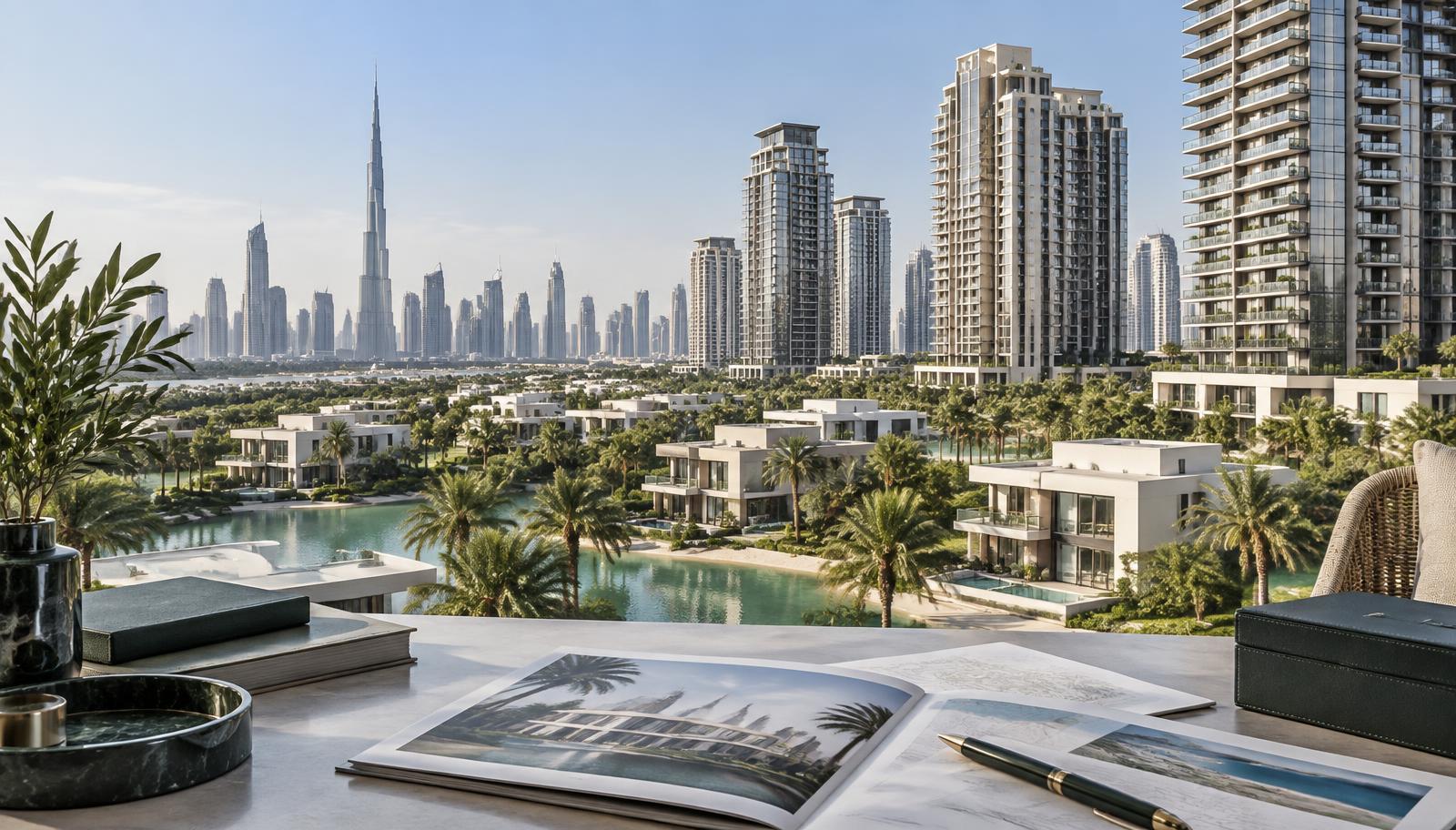
A Dubai developer can market an apartment to buyers anywhere in the world within minutes. That does not mean every project, payment plan, or quoted yield deserves the same confidence. Can foreigners buy Dubai property? Yes — but the asset must be in an area where foreign ownership is permitted, and the investment should be assessed well beyond the sales presentation.
For an international buyer, the more useful question is not whether ownership is possible. It is what you will own, how it will be registered, what your total capital commitment will be, and whether the purchase still works after fees, financing, vacancy, and an eventual exit.
Can Foreigners Buy Dubai Property in Freehold Areas?
Foreign nationals can buy, sell, lease, and inherit property in designated Dubai freehold areas. In a freehold purchase, the buyer owns the property outright and, for applicable villas or townhouses, may also own an interest in the underlying land. Ownership is not limited to UAE residents or citizens.
Many of Dubai's most active residential markets are open to foreign ownership, including Dubai Marina, Downtown Dubai, Business Bay, Palm Jumeirah, Jumeirah Village Circle, Dubai Hills Estate, Emirates Living, and Dubai Creek Harbour. The relevant point is not the neighborhood name on a brochure but the legal designation of the specific plot and project.
Some locations operate under different tenure arrangements, such as usufruct or long leasehold rights. These can still be valid and valuable rights, but they are not equivalent to perpetual freehold ownership. A buyer should see the tenure stated clearly in the sale documentation before reserving a unit or transferring a deposit.
The Ownership Record That Matters
Dubai Land Department, or DLD, is the authority responsible for property registration. For a completed property, the central evidence of ownership is the title deed issued through DLD. Buyers should ensure the registered owner, unit details, and ownership type match the contract and payment trail.
For off-plan purchases, the initial registration is generally recorded through the Oqood system rather than a final title deed. This is normal while construction is incomplete. The key protections are that the project is properly registered, buyer payments are directed to an approved project escrow account, and the sale agreement accurately records the unit, price, installment schedule, completion date, and remedies for default or delay.
Do not treat an escrow account as a substitute for project underwriting. Escrow structures provide an important layer of payment control, but they do not eliminate construction risk, market risk, or the risk of buying at an inflated launch price. Review the developer's delivery record, construction progress, competing supply, and the pricing of comparable completed units.
What a Foreign Buyer Actually Pays
The advertised purchase price is only one component of the investment. For a cash buyer, acquisition costs often include the 4% DLD transfer or registration fee, administrative charges, trustee office fees for completed-property transfers, and conveyancing or advisory costs. The exact amount changes according to transaction type, property value, and whether the purchase is completed or off-plan.
If financing is used, allow for mortgage registration costs, bank processing fees, valuation fees, insurance requirements, and potentially life coverage required by the lender. If the property will be rented, annual service charges, management fees, leasing commissions, maintenance, furnishing, utilities during vacancy, and reserve capital also affect net income.
A simple gross-yield calculation can make a weak investment look compelling. A unit priced at AED 2 million producing AED 140,000 of annual rent appears to generate a 7% gross yield. But service charges, management, leasing costs, maintenance, vacancy, and furnishing replacement can reduce the net result materially. The right benchmark is an underwritten net yield using conservative rent and occupancy assumptions, not a developer's headline return.
Can Non-Residents Get a Dubai Mortgage?
Yes, many UAE banks lend to non-resident foreign buyers, although terms vary by nationality, income profile, property type, bank appetite, and currency exposure. Non-resident buyers commonly need a larger down payment than UAE residents. Loan-to-value limits can be lower for investment properties, higher-value homes, or off-plan purchases.
A mortgage can improve capital efficiency, but it also changes the risk profile. Rental income may be received in UAE dirhams, while a buyer's income, debt servicing capacity, and eventual spending needs may be in U.S. dollars, euros, or pounds. The UAE dirham is pegged to the U.S. dollar, which may reduce uncertainty for dollar-based investors, but it does not remove exchange-rate exposure for buyers whose reference currency is the euro or pound.
Secure a realistic financing indication before committing to a nonrefundable booking amount. Do not assume a pre-approval will survive a valuation shortfall, a change in employment circumstances, or a bank's reassessment of the building or developer.
Off-Plan or Completed: The Decision Is Financial
Off-plan property can offer staged payment terms, lower initial cash deployment, and exposure to a project before completion. It may suit buyers who can tolerate a long holding period and have assessed the developer, project pipeline, and delivery risk. It can also be harder to price accurately because the buyer is purchasing a future asset, often in a market with substantial future supply.
A completed property provides a clearer picture. You can inspect the unit, verify the view and building condition, analyze actual rents, compare recent transactions, and begin leasing immediately. The trade-off is that completed stock often requires more upfront capital and may offer less flexible payment timing.
Neither route is automatically superior. A cash-flow investor may prioritize stabilized rent and a proven building. An investor seeking a defined payment schedule or a later handover may prefer off-plan, provided the price premium and completion assumptions are defensible.
Due Diligence Should Test the Sales Story
Dubai's market is transparent enough to support disciplined analysis, but only if the buyer looks past selective comparables. An independent review should test the stated price per square foot against comparable transactions, not merely advertised listings. It should also assess rent against achieved rents for similar stock, factor in service charges, and identify how much competing inventory is scheduled to deliver nearby.
The legal review should cover the sale and purchase agreement, payment schedule, cancellation provisions, developer obligations, and any restrictions on resale or assignment. For completed units, check title status, outstanding service charges, mortgages or encumbrances, tenancy status, and whether the seller has authority to transfer the property.
This is where compensation structure matters. A developer-paid agent is usually rewarded when a buyer selects a particular project, frequently one offering the highest commission. That does not automatically make the recommendation wrong, but it is a conflict that deserves to be disclosed and managed. Buyers should work with advisors — not salespeople — whose scope includes rejecting unsuitable projects, negotiating terms, and protecting the buyer's return rather than maximizing a developer's distribution budget.
Residency, Tax, and Holding Structure
Property ownership can support certain UAE residency applications, including routes commonly associated with qualifying real estate values. Requirements, valuation rules, mortgage treatment, and documentation can change, so residency should be verified against current official criteria before it becomes part of an investment thesis. A property purchase does not automatically create a visa or UAE tax residency.
The UAE generally does not levy personal income tax on rental income in the way many Western jurisdictions do. That does not mean an overseas buyer has no tax reporting or tax liability. U.S. persons remain subject to U.S. reporting and tax rules; investors from other jurisdictions may face tax on worldwide income, foreign-asset disclosure obligations, inheritance considerations, or treaty limitations.
Individual ownership may be straightforward for a single buyer using the property personally. A company or other holding structure may suit some investors, especially where succession planning, multiple owners, or portfolio separation are relevant. It can also introduce setup costs, compliance duties, banking friction, and tax consequences in the buyer's home country. Structure should follow the investor's legal and tax facts, not a generic sales recommendation.
A Better Way to Approach the Purchase
Start with an investment brief: target hold period, maximum cash commitment, required income, tolerance for construction risk, preferred liquidity, financing capacity, and personal-use needs. Then compare projects across the full market rather than accepting a shortlist determined by commission arrangements.
Before signing, calculate the all-in basis, model conservative rent and resale scenarios, confirm the registration path, and decide what would cause you to walk away. Buyers who preserve that discipline can use Dubai's accessible foreign ownership regime to build a genuinely investable position. The objective is not simply to own property in Dubai, but to own the right asset at a price, structure, and timeline that protect the return you came for.
Next step
Ready to go deeper on this topic?
Learn how BridgeYields turns this into a concrete plan for your capital.
See how we underwrite your purchase