
Dubai Title Verification Before You Transfer Funds
Dubai title verification helps international buyers confirm ownership, liens, and registration status before committing funds to a UAE property purchase.
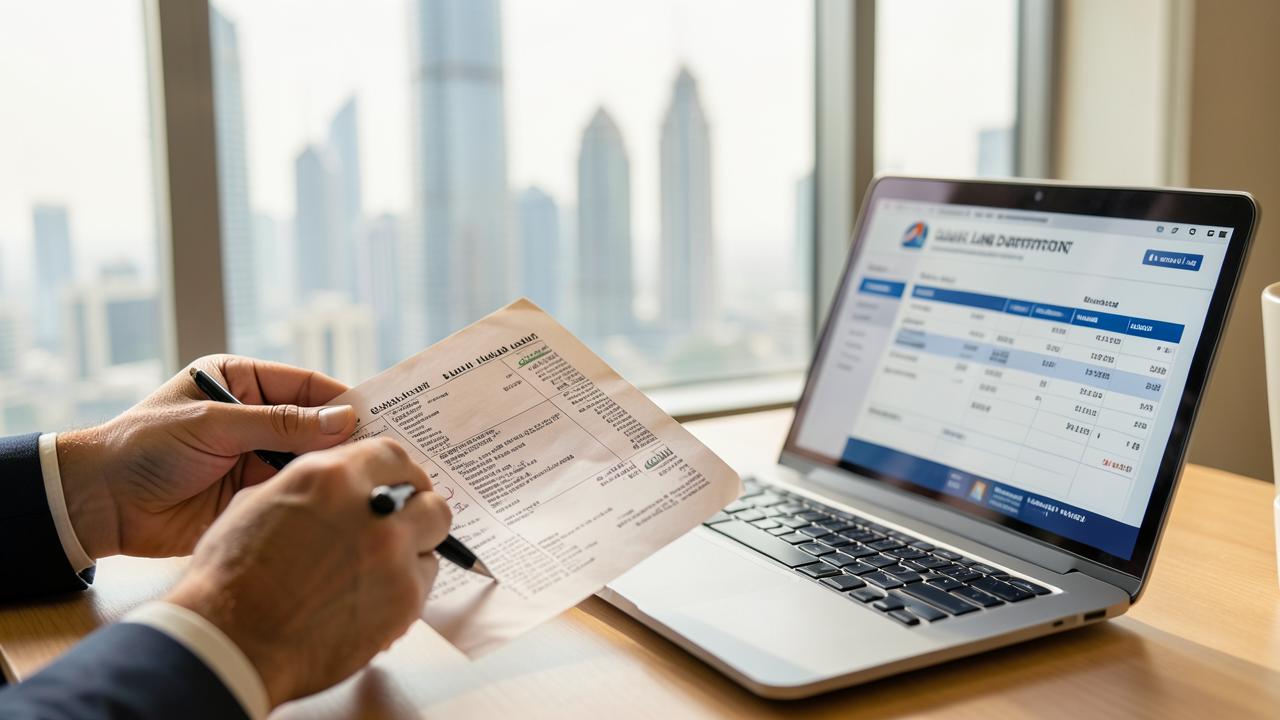
A property can look attractive on a developer brochure, produce a compelling yield projection, and still be the wrong transaction if the seller cannot transfer clean legal ownership. Dubai title verification is the point at which an investor moves from sales narrative to evidence: who owns the asset, what is registered against it, whether the unit described in the contract is the unit on record, and whether the payment path protects the buyer.
For overseas buyers, this work is not an administrative afterthought. It is a capital-protection exercise. A deposit sent before the ownership position, authority to sell, and registration mechanics are clear can create delays, additional costs, or a dispute that is difficult to manage from another jurisdiction.
What Dubai Title Verification Actually Confirms
Dubai property is registered through the Dubai Land Department, commonly called the DLD. The record and document type depend on whether a property is completed or under construction. A completed, registered unit generally has a title deed. An off-plan unit is typically recorded through the Oqood system, which documents the buyer's interest during construction before a final title deed is issued.
Verification is therefore not simply checking whether a PDF says "title deed" at the top. It means confirming that the document corresponds to the current DLD record, the property details match the proposed transaction, and the party receiving money has the legal right to sell.
For a completed property, the core questions are straightforward: Is the named seller the registered owner? Does the unit number, building, plot reference, area, and property type match the agreed asset? Is there a mortgage, attachment, restriction, or other encumbrance? If there is a mortgage, what is the bank's release process and when can the buyer obtain clear title?
For off-plan property, the analysis shifts. The investor should establish that the project is properly registered, the developer is authorized, the specific unit is available and correctly allocated, and payments are directed through the applicable project escrow structure where required. An off-plan purchase is not a title-deed transaction at the outset, so treating a reservation form as equivalent to ownership is a costly mistake.
Why the Sales Process Can Leave Gaps
Dubai's transaction infrastructure is sophisticated, but a fast sales process can still obscure material differences between a marketing claim and a legal position. This is particularly relevant when a buyer is purchasing remotely, relying on a broker who is paid by the developer, or considering an assignment from an existing off-plan buyer.
A commission-driven agent may have an incentive to keep the process moving toward a booking form or transfer date. That does not make the agent dishonest. It does mean the buyer should distinguish between a salesperson's reassurance and independently verified documentation. The same discipline applies to claims that a unit is "fully paid," "ready to transfer," "mortgage-free," or eligible for immediate leasing.
The risk is not limited to fraud. More commonly, buyers encounter incomplete documents, mismatched unit descriptions, a seller who needs lender consent before transfer, unpaid service charges, an assignment that requires developer approval, or a timeline that does not reflect the actual registration process. Each issue can be manageable. None should be discovered after funds have been committed on irreversible terms.
The Documents That Matter Before Signing
The right document set depends on the asset, but a proper review should connect the commercial agreement to the registered property record. For a resale of a completed unit, this normally includes the title deed, the seller's identification or corporate authority documents, the sale agreement, and evidence of the mortgage position if financing is involved.
The title deed should be checked against official DLD information rather than accepted at face value. A credible review looks for consistency in ownership name, unit and building identifiers, plot details, property classification, and the registration status. If a company owns the property, the analysis must also establish that the person signing has authority under the company's constitutional documents or valid power of attorney.
Where the property is mortgaged, the practical issue is sequencing. The lender may need to receive repayment and issue a liability letter or release documentation before transfer can proceed. Buyers should understand exactly who pays the outstanding loan, where funds are held, what happens if the release is delayed, and whether the contract gives the buyer a clear exit if title cannot be transferred as agreed.
For off-plan resales, request the original sale and purchase agreement, Oqood or related registration evidence, payment receipts, the developer's transfer requirements, and written confirmation of any transfer fee or outstanding installment. The contractual buyer may have an interest in the unit, but the developer's consent can be essential to completing an assignment.
A Practical Dubai Title Verification Workflow
The best workflow begins before a reservation payment, not days before closing. First, identify the transaction type: completed resale, new off-plan purchase, off-plan assignment, or corporate-held asset. The legal documents, payment route, and timing differ materially across these structures.
Next, reconcile the property details across every source. The listing, floor plan, title deed or Oqood record, sale contract, payment schedule, and developer correspondence should all identify the same unit. Small discrepancies in area measurement or naming conventions can be explainable. A different unit number, building phase, seller name, or plot reference requires resolution in writing.
Then verify the seller and signing authority. An individual seller should match the ownership record. A corporate seller requires more work because ownership, signatory authority, and any required shareholder approvals may sit across several documents. A power of attorney should be valid, specific enough for the transaction, and independently checked before it is relied upon.
After that, establish the encumbrance and settlement position. Ask whether there is a mortgage, court attachment, developer balance, unpaid service charge, or transfer restriction. The answer should be documented, not merely stated on a call. If there is an outstanding obligation, the contract should set out the release sequence, responsibility for each payment, deadline extensions, and the buyer's remedy if the condition is not met.
Finally, align payment with milestones that create protection. The correct mechanism depends on the deal, but the principle is constant: do not send a large balance directly to a seller simply because transfer is promised later. Use the recognized transaction process, documented settlement instructions, and a contract that links payment to deliverables such as lender release, developer approval, or formal transfer.
Title Deed Checks Are Not the Whole Due Diligence File
A clean ownership record does not automatically make a property a sound investment. Title verification answers whether the asset can be transferred cleanly. It does not answer whether the price is defensible, rental income is realistic, service charges erode the net yield, or a payment plan creates additional exposure.
This distinction matters in Dubai, where comparable sales can vary sharply by building, view, floor, handover date, and developer reputation. An investor buying for income also needs to test the advertised rent against active supply, likely vacancy, furnishing costs, management fees, service charges, and the time required to stabilize the unit.
For off-plan buyers, legal registration should be paired with developer underwriting. Delivery history, construction progress, escrow arrangements, supply entering the same micro-market, and the payment schedule after handover all affect downside risk. A properly registered project can still be overpriced or poorly positioned for resale.
At BridgeYields, this is why title and registration review sits alongside pricing comparables, yield analysis, payment-term negotiation, and exit planning. The objective is not merely to complete a transfer. It is to ensure the asset, structure, and price support the buyer's return target after real transaction costs and risks are considered.
When Additional Legal Review Is Worth the Cost
Not every straightforward developer purchase requires the same level of bespoke legal work. A direct purchase from an established developer, using standard documents and the required registration process, may be relatively clear after careful document review. Complexity rises when the seller is a company, the property is inherited, financed, under attachment, held through a power of attorney, or being transferred as an off-plan assignment.
International buyers should also consider their ownership and tax position outside the UAE. The UAE transaction may be clean, while the investor's home-country reporting, financing, inheritance, or holding-structure consequences require separate advice. A title deed confirms property rights in Dubai. It does not replace cross-border tax or estate planning.
Before any nonrefundable payment, ask for the document trail, reconcile it against the official registration position, and insist that the contract reflects the actual path to transfer. A seller who can deliver clean title should be able to support that claim with evidence.

About the author
Dr. Gianluca Sidoti
Founder of BridgeYields, independent financial advisor, entrepreneur and investor. A member of the Forbes Finance Council, he combines financial analysis with knowledge of Dubai’s real estate market to support investors with an independent, data-driven approach.
Next step
Ready to go deeper on this topic?
Learn how BridgeYields turns this into a concrete plan for your capital.
See how we underwrite your purchase