
Dubai Golden Visa Property Guide for Investors
Dubai Golden Visa property guide: the AED 2 million threshold, ownership costs, financing, and due diligence for investors seeking UAE residency through real estate.
Gianluca Sidoti
Founder, BridgeYields
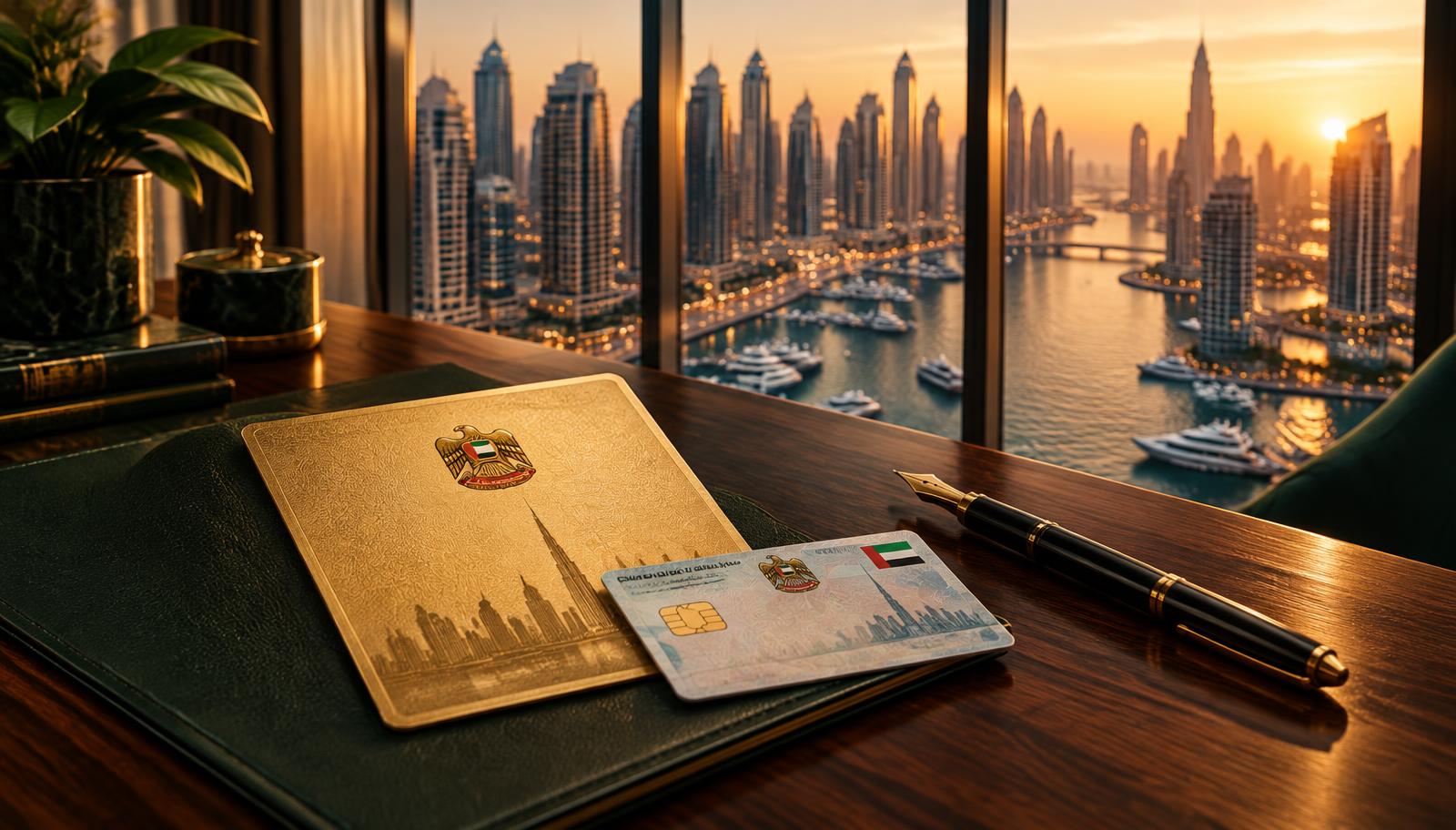
A Dubai residence visa should be the result of a sound property investment, not the reason an investor accepts weak pricing, an unsuitable payment plan, or a developer-led sales narrative. This Dubai Golden Visa property guide examines the residency route through the lens that matters most: whether the asset still works on price, income, liquidity, and downside protection after the visa application is complete.
For many international buyers, a UAE Golden Visa can add real value. It can support long-term mobility, family residency, banking relationships, and a more practical connection to Dubai. But it does not convert an overpriced apartment into a good investment. The property must first stand on its own financial merits.
Dubai Golden Visa Property Guide: The Core Threshold
The real estate investor route is generally associated with a property or portfolio value of at least AED 2 million. Qualifying applicants may be eligible for a 10-year renewable Golden Visa, subject to the applicable rules and the approval of the relevant UAE immigration authority.
That headline threshold is simple. The transaction details are not. Eligibility can depend on how the property is held, whether it is completed or off-plan, the documented value used for the application, the level of mortgage financing, and whether the investor's ownership position is sufficiently evidenced. Requirements and administrative practice can also differ between authorities and change over time.
A prudent buyer should therefore treat AED 2 million as a planning threshold, not a final legal conclusion. Before committing funds, confirm the current visa criteria directly through the relevant channels and make sure the ownership structure, payment schedule, and property documentation can support the intended application.
One Property or a Portfolio?
Investors can often meet the threshold through a single qualifying property or through multiple properties whose combined value reaches the required amount. A portfolio approach may be commercially stronger when it improves diversification — for example, by combining a ready rental unit with an off-plan asset in a location with credible future supply constraints.
However, several small units are not automatically safer than one larger unit. Each additional property introduces another developer or seller, service-charge profile, leasing cycle, title document, and resale market. The right structure depends on the buyer's expected holding period, desired cash flow, and tolerance for operational complexity.
Completed, Off-Plan, and Mortgaged Property
Completed property offers the clearest path to assessing current rent, service charges, building condition, and resale comparables. It may also provide a more straightforward evidence trail for residency purposes because title documentation and value are already established. The trade-off is that ready assets usually require more capital upfront and may offer less flexibility on payment terms.
Off-plan property can preserve liquidity through staged payments, but it introduces construction, delivery, and market-timing risk. A project should never be selected merely because a salesperson claims it qualifies for a visa. The investor should establish the developer's delivery record, escrow arrangements, contractual completion provisions, handover assumptions, competing supply, and likely rental position once the project is delivered.
Mortgage financing may be compatible with the Golden Visa route in certain circumstances, but the acceptable loan structure and supporting bank documentation matter. Investors should not assume that a property with a AED 2 million purchase price qualifies if their paid equity is materially lower. Confirm the treatment of financed property before signing, particularly where the loan is secured against the UAE asset or where funds originate from overseas lending.
The Investment Case Comes Before the Visa
Dubai's property market is fragmented. A citywide price statistic tells an investor very little about the rentability, supply risk, and exit depth of a particular tower, unit type, or submarket. The same AED 2 million can buy radically different outcomes depending on location, completion status, view, floor, layout, service charges, and developer reputation.
For a rental-focused buyer, net yield is more useful than advertised gross yield. Start with realistic annual rent, not the highest asking rent in a portal listing. Then deduct vacancy, leasing commissions, property management, maintenance reserves, service charges, insurance where applicable, and financing costs. A high gross yield can become ordinary once recurring ownership costs are correctly modeled.
For a capital-growth buyer, the key question is not whether Dubai has grown rapidly. It is whether the selected asset is being acquired below or at defensible market value relative to comparable transactions and future competing inventory. A premium branded residence may retain demand in some locations, but branding alone does not guarantee liquidity. Conversely, a plain but well-located unit with efficient layouts and manageable charges may be easier to lease and resell.
This is where independent advice changes the process. A developer-paid broker is generally compensated when a buyer selects inventory from the developer's available stock. That does not make every broker recommendation wrong, but it creates an obvious incentive to sell what pays rather than compare what protects the buyer's return. A buyer-side advisor should be able to reject a project, negotiate from market evidence, and explain why a lower-commission or no-commission option may be better for the client.
Budget for the Full Cost of Ownership
The AED 2 million threshold is not the full capital requirement. Buyers need a complete acquisition and holding budget before they decide whether a Golden Visa-linked purchase is sensible.
In Dubai, transaction costs can include the Dubai Land Department transfer fee, registration charges, broker or advisory fees, mortgage arrangement costs, valuation fees, trustee office charges, and, for off-plan purchases, administrative fees tied to assignment or registration. The exact amount depends on the transaction type and financing structure, but these costs should be modeled separately from the property price.
After closing, service charges deserve close attention. They vary substantially between communities and buildings, and they directly affect net income. Investors should also budget for furnishing, utilities during vacancy, maintenance, leasing renewals, property management, and a contingency reserve. If the investment is financed, model rate sensitivity rather than relying on the first quoted monthly payment.
Visa costs are a further but comparatively smaller consideration. Application fees, medical testing, Emirates ID issuance, health insurance, and dependent sponsorship costs can vary by applicant profile and service channel. They should be verified close to application, rather than copied from an outdated online estimate.
Due Diligence That Protects the Visa and the Exit
A property purchase tied to residency should be documented to institutional standards. The buyer needs clean evidence of ownership, value, and payment flows not only for the visa process, but also for future banking, resale, inheritance planning, and tax reporting in their home jurisdiction.
Before reserving a property, establish the legal owner, title or registration status, seller authority, outstanding mortgage or lien position, contractual restrictions, and any conditions attached to the sale. For off-plan purchases, verify project registration, escrow mechanics, unit details, payment milestones, and the contract provisions governing delay, cancellation, and assignment.
For ready property, compare the asking price with actual recent transactions where available, not just nearby listing prices. Review the service-charge history, building maintenance, owner-occupier versus investor mix, rental evidence, and competing stock scheduled to enter the market. The objective is not to find a perfect asset. It is to know which risks are being paid for and which are being ignored.
Cross-border buyers should also address holding structure and tax treatment before closing. UAE property income may be tax-efficient locally, but the investor may have reporting, income-tax, capital-gains-tax, wealth-tax, or inheritance implications in their country of residence. A UAE purchase should be coordinated with qualified tax and legal advice in the investor's relevant jurisdictions. The visa is personal residency status; it does not erase tax obligations elsewhere.
A Disciplined Buying Sequence
The most effective process starts with an investment mandate: capital available, target income, intended use, financing appetite, visa objective, and exit horizon. Only then should the market search begin.
A disciplined purchase usually follows four controls:
- Set a maximum all-in budget, including purchase costs, furnishing, reserves, and financing expenses.
- Compare multiple projects and ready assets using like-for-like price, size, rent, and service-charge data.
- Confirm Golden Visa eligibility and required documentation before funds become nonrefundable.
- Negotiate payment terms, price, inclusions, and contractual protections as one package rather than focusing only on the headline price.
BridgeYields applies this buyer-first approach because the property choice should remain defensible even if residency rules change, processing times lengthen, or the investor later decides not to apply.
A Dubai Golden Visa can be a valuable outcome of owning the right UAE real estate. The stronger decision is to buy an asset that produces credible income, has a clear resale case, and is documented well enough to support both residency and an orderly exit when your priorities change.
Next step
Ready to go deeper on this topic?
Learn how BridgeYields turns this into a concrete plan for your capital.
See how we underwrite your purchase